The Grand Egyptian Museum, Egyptian Museum in Tahrir and National Museum of Egyptian Civilization overlap in subject, but they organize attention differently. Choose by question and available energy, not by a universal ranking.
Choose GEM for a large chronological encounter
GEM can support a broad ancient-Egypt framework and a sustained encounter with monumental scale. Its size is also the practical challenge. Enter with one thread—kingship, writing, a material or a connected archaeological group—and allow the rest to remain context. Pairing a full museum visit with the entire Giza plateau risks reducing both to movement between highlights.
Choose Tahrir for dense comparison
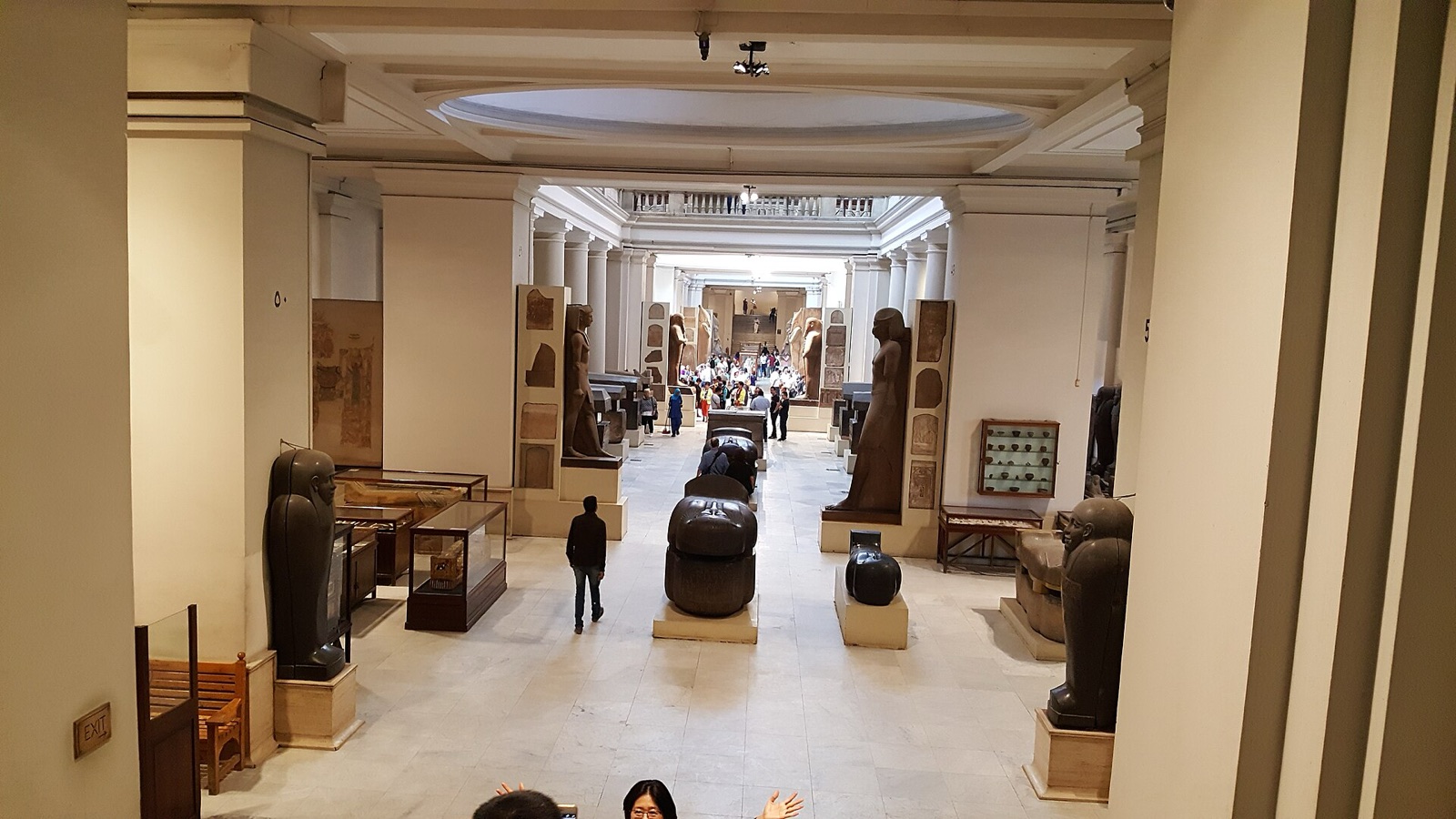
The Egyptian Museum's historic building and closely placed objects reward visitors who can make their own small route. Select two periods, statue types or materials and compare neighbors. The display environment is part of the history of archaeology and museum practice, not merely an older version of a contemporary gallery. Old highlight lists may not reflect current object locations or transfers.
Choose NMEC for a cross-period argument
NMEC offers a civilization-wide frame that can connect technology, work, belief and daily life across ancient, Coptic, Islamic and modern histories. Begin with the main chronological argument before moving into a specialist hall. This is the strongest choice when the central question is continuity and change rather than a deep survey of one archaeological period.
Do not make distance disappear
Giza, central Cairo and Fustat are different museum districts. Road conditions, entrances, security and drop-off points shape the day. A transfer consumes attention as well as minutes. One anchor museum, one real rest and one removable ending generally produce a better visit than a fixed sequence of three major institutions.
Use one question in all three
If a trip includes more than one museum, carry a shared question. Compare how each explains royal authority, arranges chronology or treats everyday objects. The answer will come partly from collections and partly from curatorial choices: room scale, label density, sightlines and the neighbors selected for each object.
Expect displays to change
Objects move for conservation, loans, new galleries and institutional reorganization. Build a theme broad enough to survive one absent masterpiece. Check official museum notices close to the visit, but treat any editorial route as a method rather than a guarantee that a particular object will occupy a particular case.
Match the institution to the group
A first-time visitor who wants a clear chronological frame may value structured orientation. Someone returning to Egyptian collections may prefer dense comparison or a cross-period question. Children, older visitors and mixed-interest groups need a route with visible pauses and removable sections. Choose for the people present, not for the museum that sounds most prestigious. The strongest institution on paper can still be the wrong environment for the day's energy and purpose.
Use absence as a curatorial question
No museum can display every object, region or period with equal weight. Notice which transitions receive whole rooms and which are compressed into a case or label. Ask what the institution is designed to explain and what requires another museum. GEM, Tahrir and NMEC become more useful when their limits are understood as part of their curatorial identity rather than scored as simple deficiencies.
Sources reviewed 28 July 2026: GEM ↗ · Egyptian Museum ↗ · NMEC ↗. Galleries and visitor conditions may change.