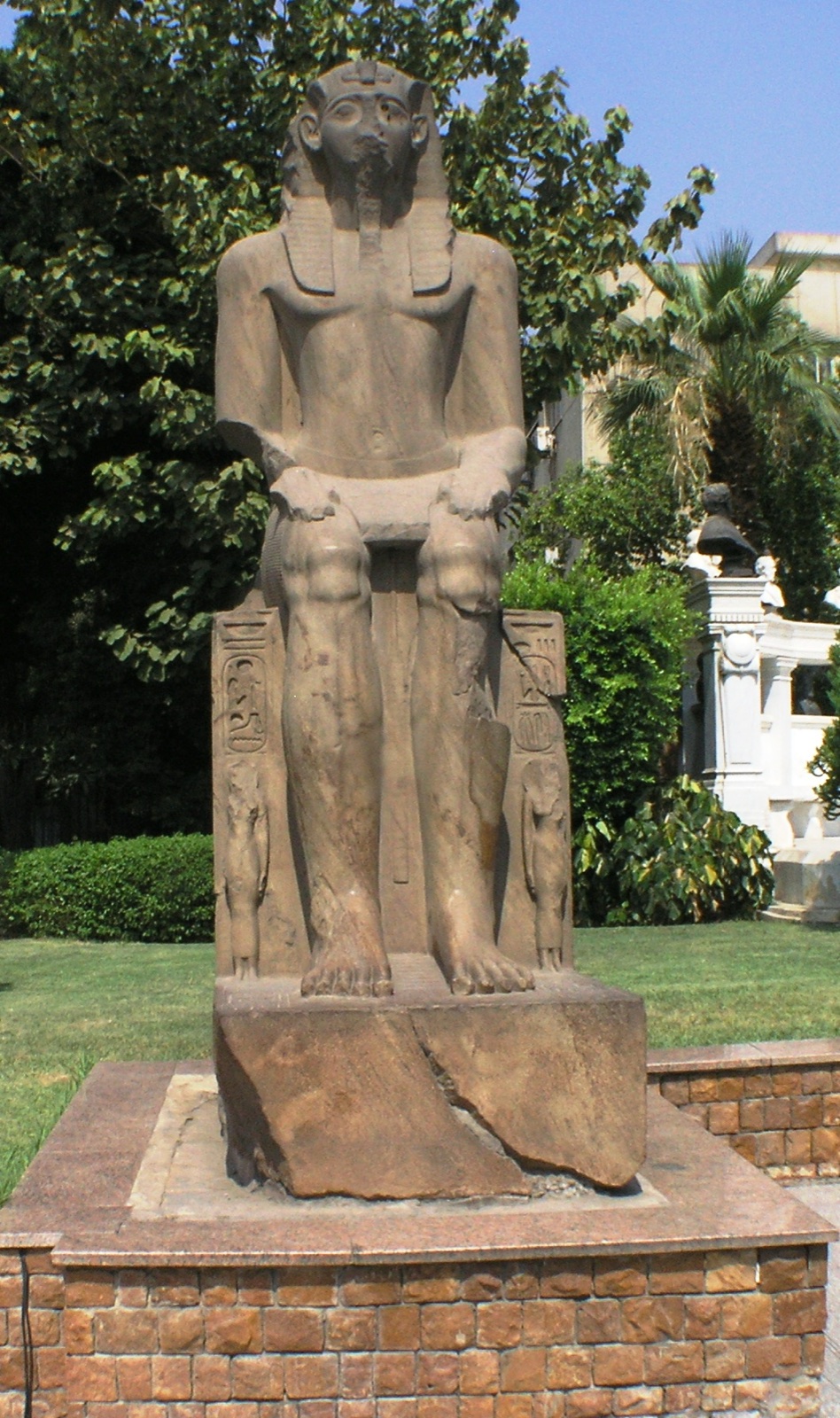
A statue is never only a portrait standing in empty space. Its pose, material, support and original location shaped how a viewer met it. Start with what the body is doing before searching the label for a ruler, official or deity.
Let posture come before identity
Describe the figure in plain physical terms. Is it seated, standing, striding, kneeling or compressed into a block? Are the shoulders square while one leg moves forward? Do the hands lie flat, hold insignia or present an offering? These are not decorative details around a name. Posture can make stability, ritual action, readiness, protection or controlled movement visible. Two figures of the same person can therefore do different work in different settings.
Notice what holds the figure together
Look for a back pillar, seat, base, surrounding block or connection between limbs and torso. These elements provide structural strength, but they can also carry inscriptions and define the figure's relationship with architecture. Museum lighting may make a support disappear into shadow. Walk to the side when the display permits it and see whether the image was conceived as a body in the round or as a frontal form attached to a larger mass.
Use scale as a relationship
“Large means important” is only a beginning. Monumental size controls distance and makes a viewer look upward. A small figure can be handled, deposited or encountered closely. In relief, different scales can organize hierarchy inside one scene. Ask who is large in relation to whom, and whether the museum mount preserves the original viewing height. A fragment placed at eye level may once have appeared far above a doorway or along a processional route.
Read surface as a history
Polish, pigment, abrasion, breaks and modern fills all change what the body communicates. Bare stone may once have carried colour or inlay. A damaged nose does not automatically prove a single deliberate act; erosion, accident, reuse and targeted alteration leave different evidence. Use label language carefully. Words such as restored, reconstructed, recut and reused mark separate moments in the object's biography.
Compare gaze and approach
A frontal face can establish a controlled encounter, while a turned body or asymmetrical group directs attention elsewhere. Stand at the distance from which the whole figure becomes legible, then move closer for carving and surface. Ask whether ancient viewers could circle it, approach only from the front or see it through an architectural opening. The museum offers a new approach, not a neutral recovery of the first one.
Put the person back into an institution
Royal and elite statues point beyond individual biography. Material supply, workshop skill, inscriptions, temples and administrative titles reveal institutions that made representation possible. A statue of an official can show how service and proximity to sacred or royal spaces were expressed. A royal image depends on gods, craftspeople and repeated conventions even when only the king appears.
Compare idealization instead of hunting realism
A face may include distinctive features while still working inside inherited conventions. Do not force a choice between “portrait” and “symbol.” Compare eyebrows, mouth, age, musculature and proportion across several figures, then ask which differences belong to period, workshop, material, restoration or intended role. A ritual image was not required to behave like a modern documentary photograph. Its success depended on recognition, effectiveness and setting as much as likeness.
Use the neighboring object as evidence
Museum displays create arguments through proximity. A small official beside a colossal ruler may clarify scale, while two seated figures can expose differences in hand position or support. Read the gallery title, then test it: what shared feature justifies this group, and what important distinction does the arrangement compress? Comparison should complicate the first statue rather than merely find another example that looks the same.
Sources reviewed 28 July 2026: Egyptian Museum profile ↗ · GEM collection ↗. Galleries and visitor conditions may change.