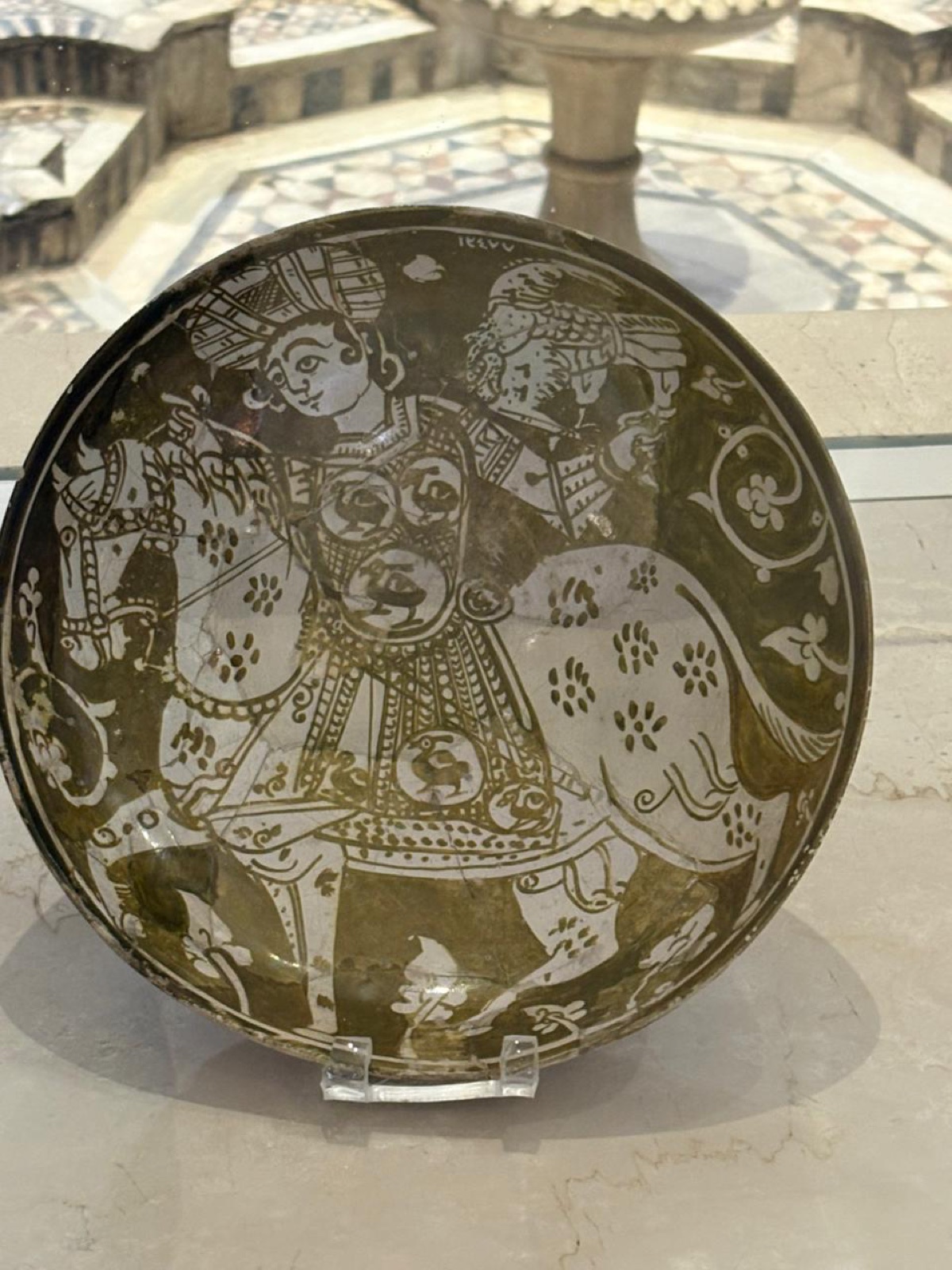
Material is evidence, not a finish applied after meaning. Stone, metal, wood, fibre, glass and clay determine which tools are possible, how an object moves through the world and what kinds of damage or repair remain visible.
Separate material from modern appearance
Start by naming what is physically present, then ask what may be missing. Stone sculpture may have lost pigment or inlay. Metal can corrode into a colour unlike its polished surface. Textile fades under light and burial conditions. A transparent museum case can make an object seem complete even when its current appearance is the result of loss, cleaning, mounting and controlled lighting.
Follow evidence of subtraction and addition
Carving removes material; casting, joining and weaving build forms through different sequences. Look for drill marks, chisel transitions, mold seams, rivets, pegs, solder, knots and changes in weave. A smooth final surface can hide the stages of manufacture, while a break may expose them. The best clue is not always on the decorated front.
Make labour specific
“Made by artisans” is too vague to explain an object. Quarry workers, transport crews, stone carvers, metalworkers, carpenters, painters, scribes, potters and weavers possessed different knowledge. A complex work could require several workshops and supply chains. Ask which decision demanded repeated practice: controlling a firing atmosphere, cutting a fine line, joining wood across grain or maintaining even tension across cloth.
Notice repair without calling it failure
Ancient repairs can show that an object remained valuable after damage. A drilled join, metal clamp, replacement element or patched textile may preserve use rather than diminish authenticity. Modern conservation has a different purpose and should be distinguished when the label permits. Both histories remind us that survival depends on care, selection and environmental luck.
Compare ordinary and prestigious materials
Rare or brilliant material attracts attention, but common ceramic, fibre and wood may reveal repeated daily practice more clearly. Museum survival is uneven: durable stone and fired clay outlast many organic objects. The collection therefore cannot be treated as a direct picture of how frequently every material appeared in the past.
Let display conditions teach conservation
Low light, flat mounts, sealed cases and restricted rotation explain how differently materials respond to exposure. A manuscript cannot show every page at once; a textile cannot hang indefinitely without strain. What is absent from display may be resting, under study or too vulnerable, not unimportant. Confirm current galleries rather than planning around one famous fragile work.
Ask how material reached the workshop
Making begins before the first visible tool mark. Stone must be quarried and transported; metal depends on ores, fuel and alloying knowledge; wood, fibre, pigment and glass ingredients enter through environmental and trade networks. Avoid claiming a precise source without evidence, but let the label's material identification open a logistical question. Distance, weight and scarcity affect who could organize production and how repair or recycling became practical.
Connect skill with value without confusing them
Expensive material does not automatically require the most complex technique, and an ordinary material can embody extraordinary control. Compare the regularity of a woven edge, the thin wall of a ceramic vessel or a carefully fitted wooden join with a visually brilliant metal surface. Value could come from rarity, labour, ritual association, ownership, durability or use. The object may combine several kinds at once.
Sources reviewed 28 July 2026: Museum of Islamic Art ↗ · Coptic Museum profile ↗. Galleries and visitor conditions may change.